
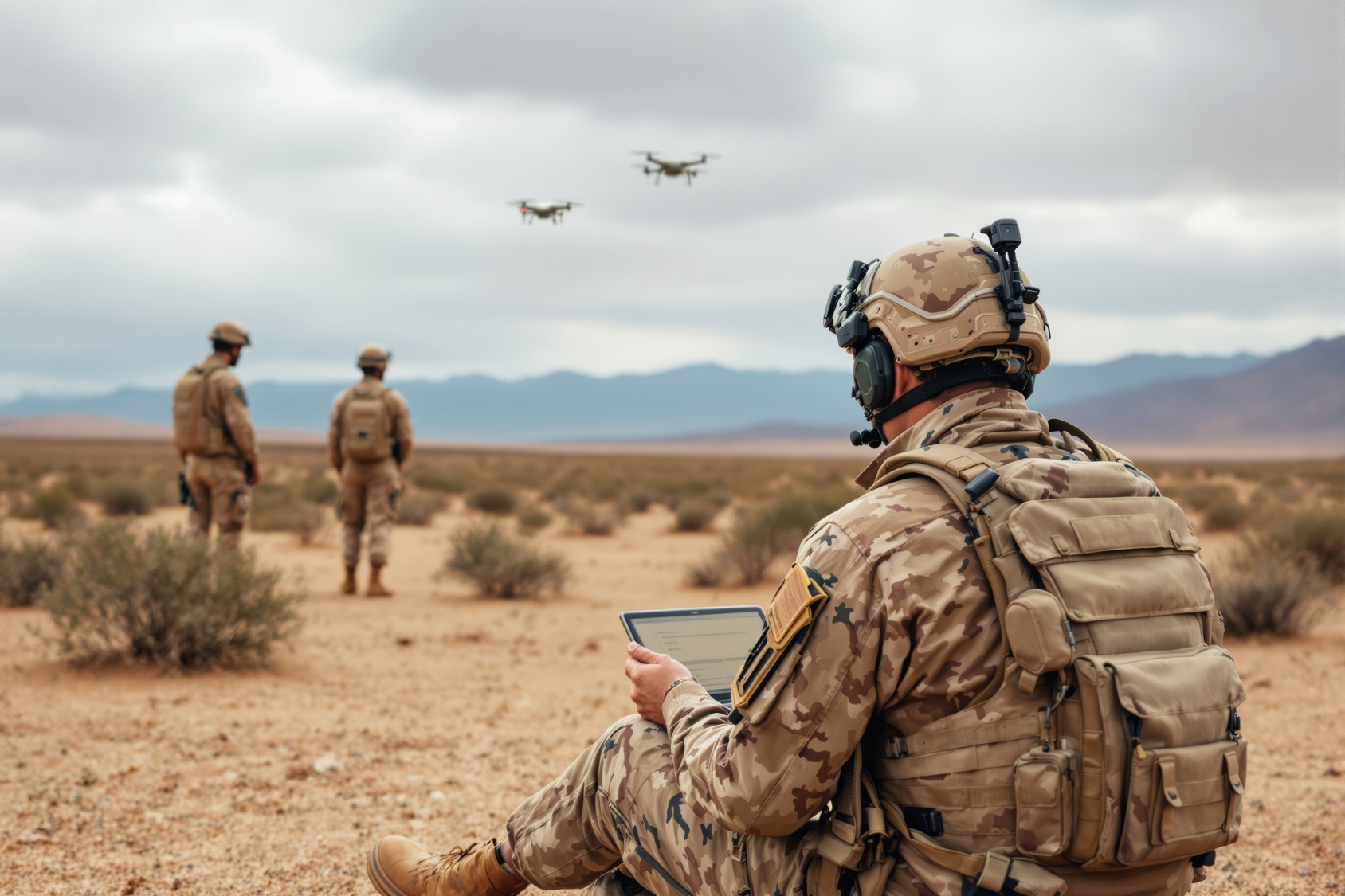

The Tactical Edge Has Changed
Modern military operations generate more data than ever. Sensors are more widely distributed, and information comes from an increasing number of platforms and systems. The value of that data depends on whether it reaches the people who need it in time to inform their decisions.
That becomes harder in contested environments, where communications can be jammed, networks disrupted and command systems targeted. Units may have to operate with limited bandwidth, intermittent connections or no access to wider networks at all.
These conditions are known as denied, degraded, intermittent and limited (DDIL) environments. They create a practical problem for mission teams: how do they keep operating when the information and services they rely on are no longer consistently available?
When The Connection Isn’t There
Losing connectivity can mean more than missing an update. Personnel may lose access to remote services, work with outdated information or struggle to share data with other systems. The consequences depend on the mission, but the need for information does not disappear when the network goes down.
Organizations need to know which capabilities can continue locally and which depend on connections to other systems. That distinction matters when planning alternative communications, but also when considering how information can be shared securely across the mission.
Even when a connection is available, information may need to move between systems operating at different classification levels. A vehicle, for example, may contain separate security domains that need to exchange data without allowing unrestricted communication between them. That information must reach the right destination without compromising the controls protecting each environment.
Secure information exchange remains essential when communications are disrupted or unreliable. Even where connectivity is available, organizations need ways to transfer data securely between systems without compromising the controls protecting each environment. In this week’s Everfox Strategic Session, we’ll look at how these requirements come together in practice.
Designing for the Conditions on the Ground
Technology at the tactical edge has to work within constraints that look very different from those in a headquarters or data center. Space, weight, power and cost all effect what can be deployed, while bandwidth and processing capacity may be limited even as data demands increase.
Meeting these demands means choosing technology that fits the deployment, rather than assuming solutions designed for headquarters will work at the tactical edge. Physical constraints, available processing capacity and the need to exchange information securely all influence what is practical.
These requirements need to be tested under realistic conditions. Restricting bandwidth or introducing intermittent connectivity during exercises can help reveal dependencies on external services and identify where planned capabilities may fall short. Testing in this way gives organizations the opportunity to address weaknesses before they affect operations.
In our upcoming Everfox Strategic Session, Keeping Mission Data Moving in DDIL Environments, Kayla Moore, Principal Sales Engineer at Everfox, will discuss how communications disruption affects operations at the tactical edge, why secure information exchange remains essential and what organizations need to consider when preparing technology for these conditions.
Join us to explore the practical challenges of keeping mission-critical information available and secure when communications cannot be guaranteed.
Register for the Everfox Strategic Session: Keeping Mission Data Moving in DDIL Environments.